The Internet of Things (IoT): Building a Smarter, Connected World

The Internet of Things (IoT) is creating a smarter, connected world — powering smart cities, next-generation businesses, healthcare innovation and real-time automation.
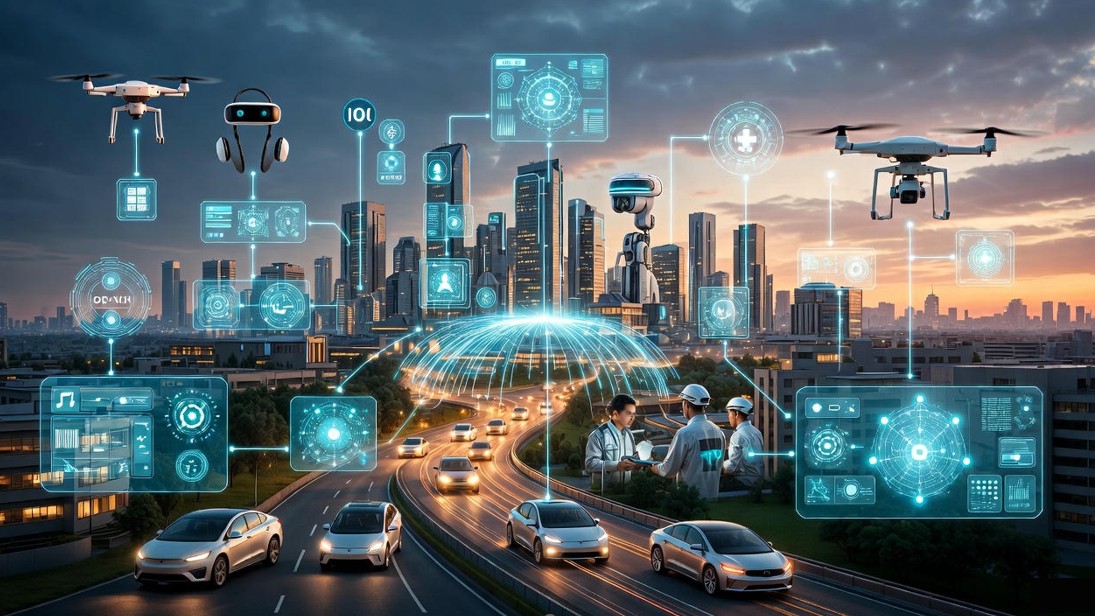
The Internet of Things (IoT) is quietly transforming the world through millions of tiny connections happening every second. From smart homes and intelligent factories to connected transportation systems and healthcare automation, IoT is redefining how societies operate, how businesses scale, and how individuals live. This interconnected ecosystem is rapidly expanding, and analysts predict that IoT-linked devices could exceed 30 billion globally within the next few years, reshaping economies and everyday life.
What Is IoT and Why Does It Matter?
IoT refers to physical devices, sensors, appliances, vehicles, machines that communicate and exchange data across networks without human intervention. These connected systems generate real-time insights, automate processes, reduce waste, and create environments that learn and adapt.
IoT matters because it bridges the digital and physical world. Decisions once based on guesswork are now powered by data, measurement, and continuous feedback.
Smart Cities: The Future of Urban Living
Cities around the world are adopting IoT to improve infrastructure, safety and efficiency. Smart traffic lights respond to congestion in real-time, waste bins alert sanitation services when full, and environmental sensors track air quality to support public health planning. As infrastructure becomes more intelligent, residents benefit from cleaner streets, reduced emissions, and faster mobility.
The long-term vision is clear: cities that think, respond and self-manage.
IoT in Business: The Next Competitive Edge
The corporate landscape is changing, and IoT is now a central driver of business efficiency. Manufacturers use smart sensors to monitor machine health, prevent equipment failure, and maintain productivity. Retailers track inventory automatically, farms use connected irrigation systems to reduce water use, and logistics firms follow shipments across entire supply chains in real-time.
Companies that adopt IoT earlier gain a measurable advantage lower costs, higher output, smarter decision-making.
Healthcare and Human Life: Connected Wellness
IoT is enhancing medicine and patient care. Wearable devices track heart rate, sleep patterns, blood oxygen and movement, transmitting data directly to medical systems. Hospitals use connected equipment to monitor patients continuously, reducing risks and response time.
In future, IoT may enable remote surgeries, AI-supported diagnostics and personalized treatment plans monitored minute-to-minute.
Security, Privacy and the Challenge of Scale
However, a connected world brings new risks. The more devices we place online, the more endpoints exist for cyberattacks. Weak passwords, outdated software and unsecured systems create vulnerabilities at scale. Governments and companies must now accelerate cybersecurity frameworks, encryption methods and regulatory standards to ensure safety in mass connectivity.
IoT cannot grow without trust and security is the foundation of trust.
A Smart World Is No Longer a Vision, It Is Here
IoT is no longer a future concept, it is the architecture of the modern era. From energy grids to wearables, transportation networks to medical devices, connectivity is shaping a new phase of human evolution. The world is moving toward systems that anticipate needs rather than react to them.
A smarter world is being built, one connected device at a time.
Images :

Comments 1

Maria Ch.
10 months agoIt is scary all the progress of the technology , Security remains a main concern for every one and in all aspects of life, we will not feel the same, privacy will become a memory from the past , this is how we will live?



Recommended Post


Top U.S. Lawmaker Accuses DOJ of Cover-Up in Jeffrey Epstein Files


Lindsey Graham’s Rhetoric Fuels Chaos While He Denies Responsibility






Leave a Comment