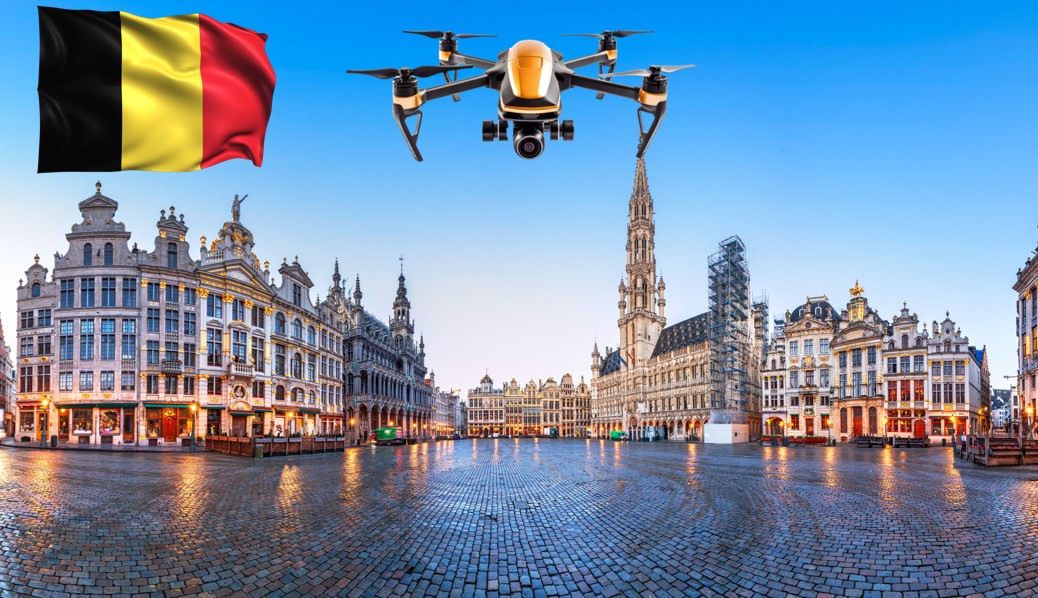
A series of mysterious drone incursions over Belgium’s airports and military sites has raised national security concerns, as European officials suspect the incidents may be linked to pressure over €183 billion in frozen Russian assets held in Brussels.
Brussels A wave of unexplained drone sightings over Belgium’s most sensitive sites airports, military bases, and critical infrastructure has escalated into a full-blown national security alert and sparked geopolitical debate across Europe. With more than €183 billion in frozen Russian assets held largely through Belgium’s Euroclear financial network, a growing number of European officials believe the drone activity may be far more than a nuisance: it could be a strategic warning.
Belgian intelligence services have confirmed that the drones are “highly likely” operated or coordinated by a state actor. While officials refrain from explicitly naming Russia, multiple European leaders have publicly drawn the connection.
A German Warning: “Don’t Touch the Assets”
German Defence Minister Boris Pistorius was the first to openly suggest a link between the drone incursions and ongoing EU discussions about using profits from frozen Russian assets to support Ukraine.
“This is a measure meant to spread insecurity,” Pistorius said. “A message to Belgium: don’t you dare touch the frozen assets.”
His comments landed sharply across European capitals, intensifying debate over whether Russia is engaging in hybrid warfare leveraging intimidation tactics without firing a shot.
Why Belgium Is at the Center of the Storm
Belgium is the unofficial heart of the EU’s frozen asset strategy.
More than €183 billion in Russian central bank funds are immobilized here, mostly managed through Euroclear, a powerful European financial clearinghouse based in Brussels.
The sheer size of the assets, the largest concentration anywhere in the world makes Belgium a natural target for pressure campaigns.
European leaders continue to debate:
- Should the EU use profits (interest) generated by the assets for Ukraine?
- Should parts of the assets themselves be tapped for reconstruction?
- What legal and financial risks does Belgium face if it complies?
Belgium has taken a cautious stance. Officials warn that confiscating or redirecting the funds without rock-solid legal backing could undermine trust in European markets, damage Euroclear, and trigger lawsuits from Russia and affected investors.
Drone Incidents Escalate
The drone activity hasn’t been subtle.
Confirmed incidents include:
- Temporary disruptions at Brussels Airport and Liège Airport
- Drones spotted near military bases
- Overflights reported close to a nuclear research facility
- Repeated sightings across critical transport nodes
Belgium has activated its National Security Council to assess ongoing threats and is now working with allies to strengthen anti-drone detection and countermeasures. The U.K. has already offered technical assistance, sending specialized equipment designed to track and neutralize rogue drones.
A New Era of Hybrid Pressure?
The suspected link between the drones and frozen Russian assets fits a broader pattern of 21st-century hybrid tactics psychological operations, cyberattacks, disinformation, and now drone intimidation.
This form of pressure allows a state to:
- Signal capabilities
- Create fear and confusion
- Undermine decision-makers
- Avoid triggering direct military retaliation
For Belgium, the challenge is immediate: responding firmly without escalating the standoff or jeopardizing financial stability.
For the EU, the stakes are even higher. The bloc must decide whether to press ahead with using the assets for Ukraine potentially testing Russia’s tolerance or step back to avoid further destabilization.
What Happens Next?
Several outcomes are now being closely watched:
1. EU Unity on Frozen Assets
A decision on how and when to use the assets is expected soon. Belgium insists any move must be collective and legally sound.
2. Increased Defense Measures
Belgium is preparing new anti-drone protocols and may expand cooperation with NATO allies.
3. Possible Attribution
If Belgium publicly attributes the drone incursions to a state actor, diplomatic consequences could follow.
4. Russia’s Next Move
If the drones were indeed a warning, more hybrid pressure cyberattacks, disinformation could follow.
A High-Stakes Moment for Europe
The convergence of national security, financial power, and geopolitics makes this one of the most consequential stories in Europe today.
Belgium finds itself at the nexus of an unfolding global confrontation:
- a superpower defending its frozen fortune,
- a continent struggling to support Ukraine,
- and a new era of silent, hovering threats in the skies above Europe.
How Belgium and the EU react in the coming weeks may reshape not only the Ukraine war but the legal and security framework governing frozen state assets for years to come.











Comments 0