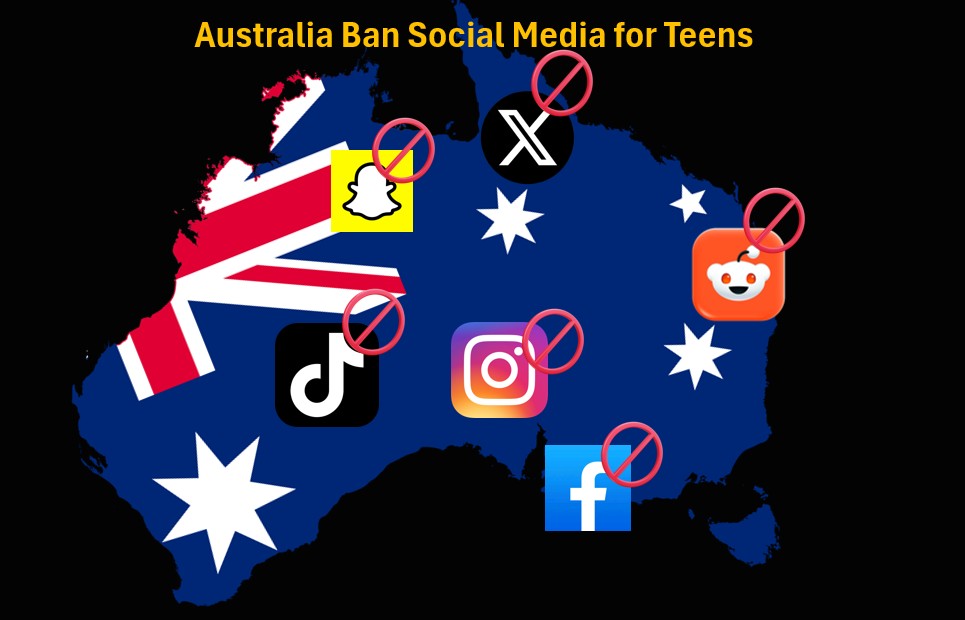
Australia is preparing to introduce one of the world’s toughest regulatory frameworks for teen social-media usage, driving global debate over youth safety, digital freedoms and platform accountability. While no official ban exists, the country’s proposals
In a move that has captured international attention, Australia is preparing to introduce sweeping regulations on teenage social-media access, positioning itself as a global frontrunner in digital-age governance. While no formal nationwide ban has been enacted, Canberra’s ongoing discussions on age-verification, platform accountability, and algorithmic oversight indicate a profound rethinking of the role social media plays in the lives of young users.
The proposed measures reflect growing political pressure following multiple national inquiries into cyberbullying, youth mental health, online grooming, and unregulated AI-driven content recommendations. Australian officials warn that “digital spaces have outpaced public safeguards,” prompting calls for immediate reform.
A Turning Point in Global Digital Governance
If implemented, Australia’s framework could become one of the most stringent globally, rivaling and potentially exceeding youth protections in Europe and Asia. Policy analysts say these moves may trigger a global reset in how nations approach social-media access for minors.
Governments in the Middle East, EU, and North America are closely tracking developments, with several officials privately describing Australia as “the testing ground for next-generation digital regulation.”
What Australia Is Actually Proposing
Despite viral claims of a full ban, Australia has not outlawed teen social-media usage. Instead, the government is weighing several unprecedented mechanisms:
Policies under active review
- Mandatory age verification for all social-media users
- Restricted or “safety mode” accounts for minors
- Limits on algorithm-driven content for those under 16
- Curfew-style browsing restrictions
- Mandatory reporting systems for online harms
- Stronger data-handling obligations for tech platforms
What is not in place
- No nationwide prohibition for users under 16 or 18
- No enforcement mechanism banning access to major platforms
- No finalized bill mandating platform lockouts
Officials insist that any reforms must “balance youth protection with digital rights.”
Youth Mental Health at the Center of the Debate
Australia’s intensifying discussion comes amid rising concerns about:
- Escalating teen anxiety and depression
- Social comparison pressures driven by platform algorithms
- Exposure to harmful content, cyberbullying and harassment
- AI-generated deepfake abuse targeting minors
Health authorities say the country is witnessing “a generation shaped by unmoderated digital environments.”
International Reaction: From Support to Skepticism
The proposed reforms have generated intense reactions across continents:
Supporters argue
- Social-media companies have failed to protect minors
- Governments must intervene where platforms will not
- Age verification is a necessary baseline, not an overreach
Critics warn
- Verification systems could compromise privacy
- Young people may lose access to key support communities
- Over-regulation may disproportionately target vulnerable teens
- Enforcement may be technologically infeasible
Digital-rights advocates stress that regulation must be “transparent, accountable and rights-driven.”
Tech Companies Brace for a Regulatory Tsunami
Global platforms including Meta, TikTok, Snapchat, and X, are preparing for potential compliance challenges:
- AI-based age verification tools
- Higher moderation budgets
- New liability risks
- Potential restrictions on targeted advertising
- Reduced engagement among younger users
Investors are monitoring Australia closely, viewing its legislation as a policy trendsetter that could soon be replicated by other major economies, including the GCC.
Why Middle Eastern Governments Are Watching
For Gulf states and regional regulators, Australia’s proposals raise important questions:
- How should emerging digital economies protect minors?
- Could identity-based digital systems offer stronger safeguards?
- How can youth access remain fair without over-surveillance?
Analysts believe the UAE, Saudi Arabia, and Qatar could adopt hybrid models blending Australia’s regulatory backbone with region-specific digital frameworks.
Conclusion: Australia May Redefine the Global Relationship Between Youth and Social Media
What began as a domestic inquiry has now grown into a global discussion on youth safety, digital freedoms and corporate accountability. Whether or not Australia ultimately adopts a strict regulatory regime, its initiatives have already reshaped the global conversation and may set the blueprint for a new era of digital governance.











Comments 0