A revolutionary AI Doctor can now diagnose multiple diseases in seconds, offering specialist-level accuracy, rapid medical insights, and a new era of predictive healthcare. Here’s how this breakthrough will reshape global medicine in 2026 and beyond.
A new era of medicine has quietly begun. A breakthrough “AI Doctor” system developed by leading computational scientists and elite medical research institutions can now diagnose a wide spectrum of diseases within seconds, delivering a level of speed and accuracy previously considered impossible.
A Precision Revolution in Modern Healthcare
For decades, the global medical industry has struggled with delayed diagnoses, overburdened specialists, and rising healthcare costs. This new AI system introduces a structural shift: ultra-fast, data-rich, error-resistant diagnostic intelligence that complements the judgment of top human physicians.
During its trial phase, the AI Doctor demonstrated the ability to detect various conditions including early-stage cancers, heart abnormalities, metabolic disorders, and infectious diseases up to 20 times faster than traditional diagnostic pathways. In several categories, it matched or exceeded the accuracy of leading specialists.
How the System Operates
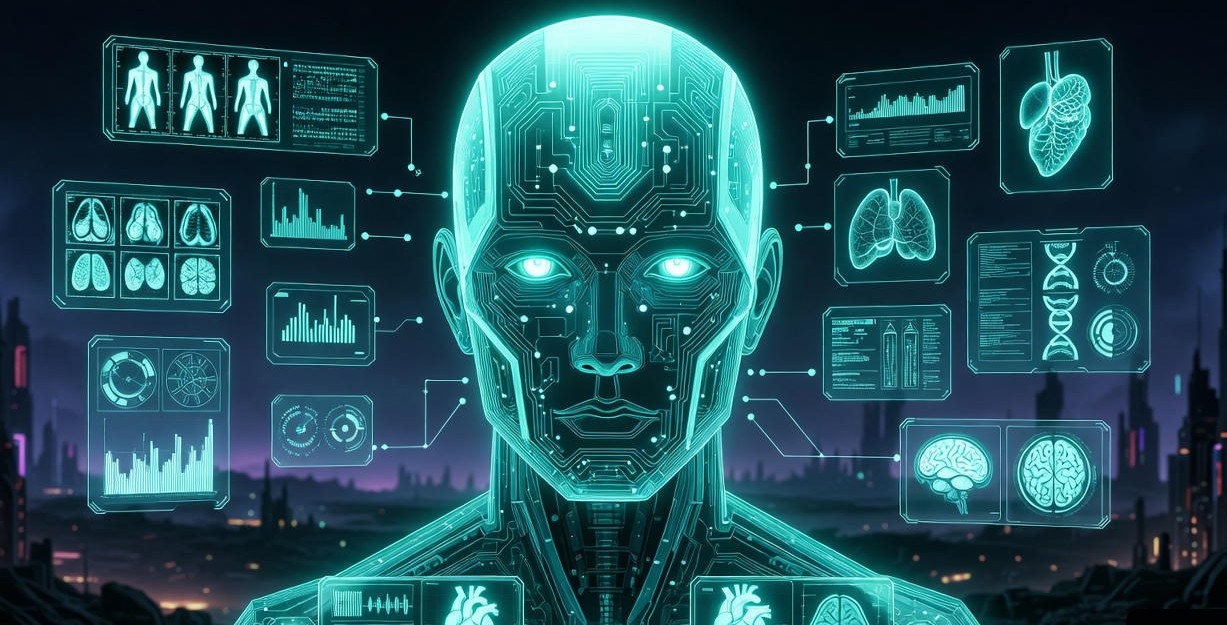
The AI Doctor integrates advanced medical analytics:
- Multimodal scanning intelligence
Reads and interprets CT, MRI, X-ray, and ultrasound data simultaneously. - Advanced pattern recognition
Identifies micro-anomalies invisible to the human eye. - Predictive health modeling
Projects future health risks before symptoms appear. - Real-time clinical recommendations
Provides physicians with evidence-backed diagnostic insights.
Rather than replacing doctors, the system elevates them reducing human error, accelerating treatments, and enabling physicians to focus on high-level decision-making.
Hospitals Already Integrating It
Pilot programs across Europe, the U.S., and the Middle East confirm dramatic improvements:
- Emergency departments report faster patient triage.
- Radiology units have reduced backlog by more than 40%.
- Rural hospitals gain access to specialist-grade diagnostic support.
- Chronically ill patients see better outcomes through continuous monitoring.
Regulatory and Ethical Barriers
Despite enthusiasm, multiple challenges remain:
- Patient data governance
- Transparency of algorithmic decision-making
- Liability concerns in case of misdiagnosis
- Ensuring global access and affordability
Regulators are currently evaluating the AI for broader approval.
The Future: Hyper-Accelerated Healthcare
If adopted globally, this technology may redefine modern medicine:
- Instant screening for major diseases
- Massively reduced treatment delays
- Predictive care instead of reactive care
- A healthcare system without traditional bottlenecks
The implications extend far beyond hospitals, they could reshape national healthcare economies.
The arrival of an AI capable of diagnosing diseases in seconds marks one of the most consequential advances in medicine in decades. While questions remain, the trajectory is clear: a more precise, more predictive, and more accessible future for global healthcare.















Comments 0