California’s new AI Safety Act introduces groundbreaking rules for Big Tech, focusing on transparency, risk management, and accountability. Experts say this could become the blueprint for global AI regulation.

California’s new AI Safety Act introduces groundbreaking rules for Big Tech, focusing on transparency, risk management, and accountability. Experts say this could become the blueprint for global AI regulation.
California has made history once again this time, not in entertainment or innovation, but in regulation.
The state has officially passed the AI Safety and Accountability Act, the first law of its kind in the United States designed to establish transparency, safety, and ethical standards for artificial intelligence. The law marks a turning point in how governments worldwide might soon approach AI oversight.
Governor Gavin Newsom signed the legislation after months of debate between policymakers, technology experts, and industry lobbyists. The new rules require companies developing or deploying AI systems to test for safety risks, disclose data sources, and report potential biases or harms in their models.
“AI has transformative potential—but with that comes transformative responsibility,” said Newsom during the signing ceremony in Sacramento. “California will not wait for a tragedy before acting.”
Under the law, any company operating within California that develops “high-risk” AI systems that could influence healthcare, law enforcement, finance, or employment decisions must undergo independent third-party safety audits.
Failure to comply could lead to multi-million-dollar penalties and even suspension of operations.
The California Department of Technology (CDT) will oversee the rollout, ensuring tech giants like Google, Meta, and OpenAI adhere to strict reporting standards. Analysts expect other states and potentially the European Union to follow suit, making this law a model for international AI regulation.
The AI industry has grown at breakneck speed, with investment surging past $200 billion in 2025. Yet concerns about data misuse, misinformation, and job automation continue to rise.
California’s move could prompt a global wave of regulatory alignment, especially in regions like the EU and Asia, where lawmakers are debating similar measures.
Tech law analyst Dr. Lisa Gomez explained:
“California has always been a bellwether for digital policy. What happens here usually becomes the global standard within a few years.”
Reactions from Silicon Valley were mixed. Supporters argue that the law fosters public trust and innovation, while critics fear it could stifle creativity and slow AI development.
Executives from smaller AI startups expressed concern about compliance costs, saying the law could favor large corporations that can afford the legal and operational overhead.
Meanwhile, advocacy groups like AI Ethics Now applauded the decision, calling it a “long-overdue measure to protect humanity from unchecked machine intelligence.”
California’s initiative may soon influence international AI governance frameworks. Early reports suggest Canada and Japan are exploring similar regulations, while the United Nations AI Task Force plans to use the California model as a case study in its 2026 AI Safety Guidelines.
“Regulating AI isn’t about limiting innovation,” said AI ethicist Dr. Arjun Patel. “It’s about guiding it responsibly so that human progress remains the focus & not profit alone.”
California’s AI Safety Act signals a powerful shift toward responsible innovation. As artificial intelligence reshapes industries and societies, this law stands as both a warning and a model reminding Big Tech that ethical development and transparency aren’t optional anymore; they’re the new foundation of progress.



Jeffrey Epstein Scandals: New Revelations, Unanswered Questions, and Global Fallout
February 08, 2026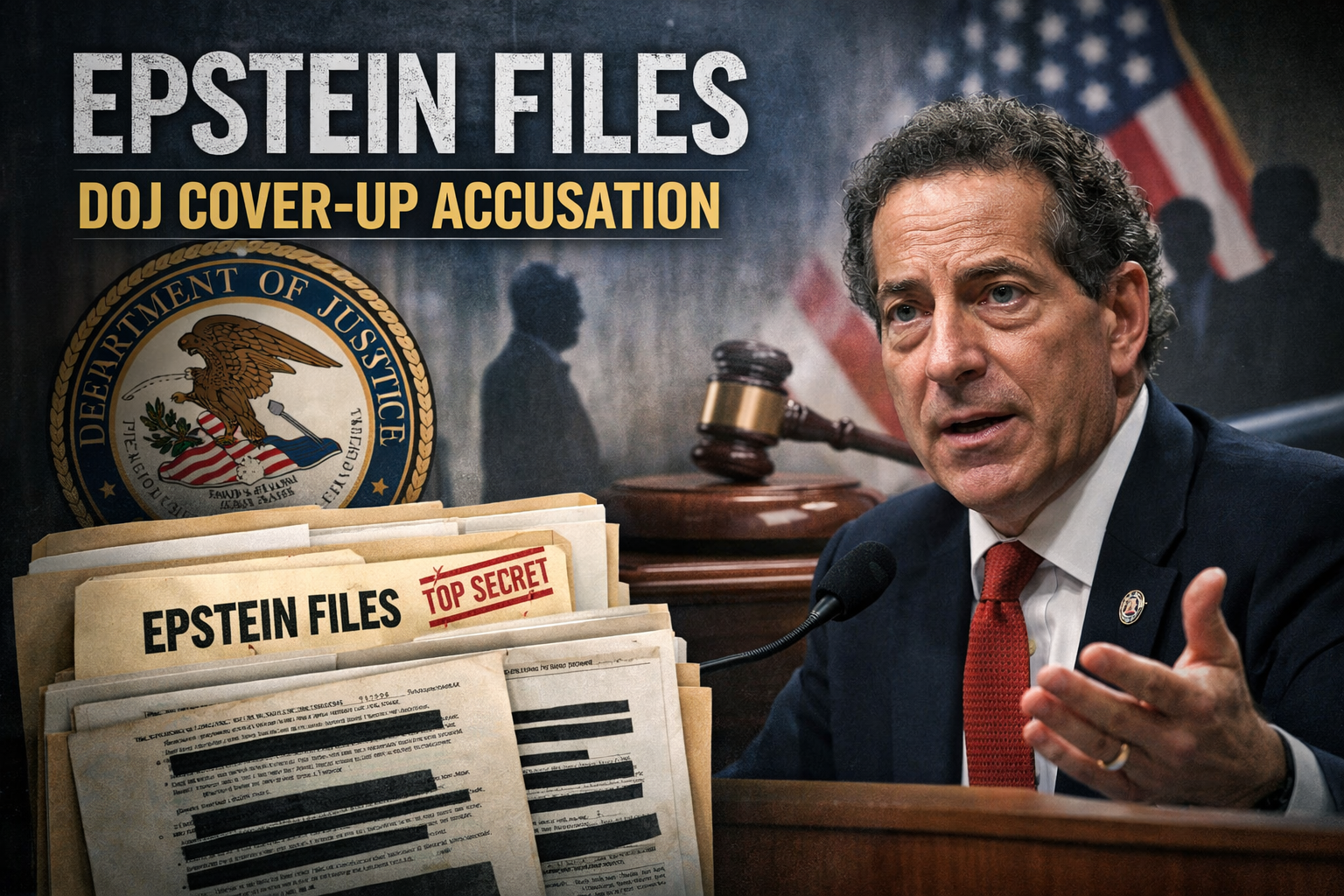







Comments 0