
Africa's mobile money grows up: from payments to credit
Africa handles most of the world's mobile money. The next stage is turning payment apps into full financial services, and investors are watching closely.
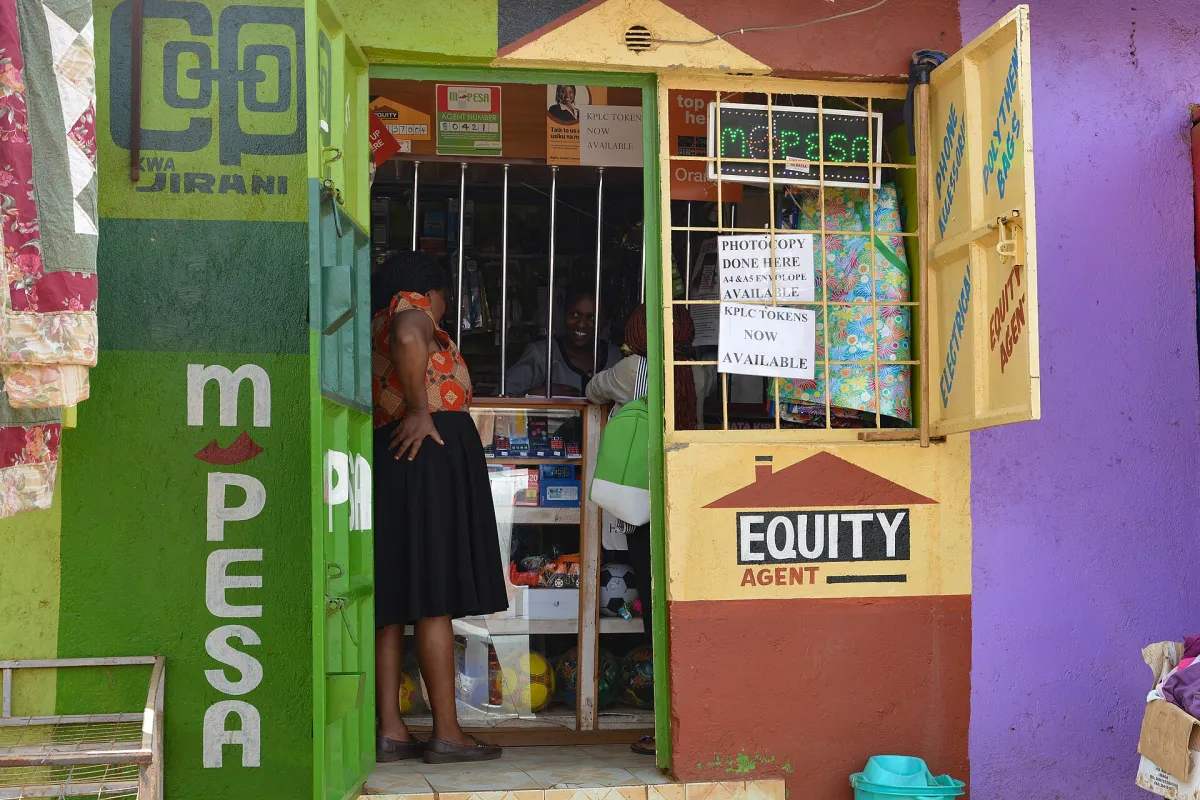
When M-Pesa launched in Kenya in 2007, it let people send money by text message. Nearly two decades later, mobile money is part of daily life across much of Africa, used to pay school fees, buy groceries, receive wages and send help to family in another town. Now the industry is trying to do something harder: turn payments into banking.
The scale
More than $2 trillion flowed through mobile money wallets around the world in 2025, according to the GSMA, the association of mobile operators, with Sub-Saharan Africa as the main driver. A report published by Boston Consulting Group in March 2026 estimated that Africa accounts for roughly 74 percent of global mobile money transaction volume.
The largest services, run by mobile operators such as Safaricom, MTN and Airtel, each serve tens of millions of customers. In many markets they reach far more people than traditional banks ever did.
Beyond payments
Moving money is useful, but it is not where most of the profit in finance lies. The next wave, as BCG calls it, is about credit, savings, insurance and investment. Phone-based loans, often small and short-term, are already common. Savings products that pay interest, insurance for crops or health, and tools that help small shops manage stock and borrow against their sales are spreading.
The data that mobile money creates helps. A trader with years of payment history on her phone may have no bank statements, but her transactions show a lender how her business really works. BCG and investment firm QED have projected that African fintech revenues could grow about 13-fold to $65 billion by 2030.
A tougher funding climate
Investors are more careful than they were a few years ago. African startups raised about $1.44 billion in the first half of 2026, according to figures reported by bne IntelliNews, with debt financing and mergers playing a bigger role than before. The median disclosed deal size fell from $4.65 million in the first half of 2025 to $2.65 million a year later.
That pressure is pushing companies toward profit rather than growth at any cost, and toward partnerships. Fintechs that once tried to do everything alone are increasingly working with banks and telecom operators, combining their apps with the licences and customer bases of established players.
The challenges
Lending to people without credit histories is risky, and some digital lenders have been criticised for high costs and aggressive collection. Regulators across the continent are tightening rules on consumer protection and data. Currency swings and high inflation in some countries make it hard to offer long-term savings products.
Still, the direction is clear. Africa skipped the era of branch banking and went straight to mobile. If the next stage succeeds, it could skip ahead again, bringing millions of people into formal finance for the first time.
For another look at how technology is reshaping finance, read our explainer on tokenised funds.
Lessons for other regions
Africa's experience is studied closely elsewhere. Countries in South Asia and Latin America have built their own versions, often with central banks running instant payment systems instead of telecom operators. In the Gulf, where many workers send money home to Africa and Asia, cheaper and faster transfers are a priority for banks and exchange houses. The common lesson is that people adopt digital money quickly when it solves a real problem, such as getting paid, paying bills or sending money home, and is cheaper than the alternative. Read our guide to AI tools for small businesses for more on technology that small firms can use today.
The companies that win will be the ones that keep the low costs and convenience of mobile money while earning the trust that savings and credit require.
Sources: GSMA, State of the Industry Report on Mobile Money 2026; BCG, Beyond Payments; bne IntelliNews.
Read next

The 5 Biggest Mistakes Entrepreneurs Make in Their First Year - And How to Avoid Them
Launching a business is one of the most exciting and intimidating moves an entrepreneur can make. The first year is often a whirlwind of dec...

From Idea to Empire: The Modern Entrepreneur’s Playbook
A new generation of entrepreneurs is rewriting the rules of success. In today’s rapidly shifting economy, the journey from a simple idea to...

The Rise of AI Billionaires: Who’s Next?
Artificial Intelligence isn’t just reshaping industries, it’s creating an entirely new class of billionaires. Over the past few years, entre...

How AI Is Revolutionizing Wealth Management in 2026 and Beyond
Artificial intelligence (AI) is rapidly redefining the future of wealth management, creating a new era of smart, data-driven investing. In 2...